Homilies for the Solemnity of the Holy Mother of God
Holy for Solemn First Vespers
“From the dust he lifts up the lowly”
“Remember that you are dust, and to dust you shall return.” Every Ash Wednesday, we’re reminded of our mortality, part of the sad inheritance we have received from our first parents. Through their prideful self-assertion, Adam and Eve damaged their fellowship with God and passed on that broken relationship to all their descendants. But that’s not the end of the story. God has no intention of leaving us to wallow in this miserable condition. A few moments ago we sang with the psalmist, “From the dust he lifts up the lowly, from his misery he raises the poor, to set him in the company of princes, yes with the princes of his people.” At the turning point of history, the Lord performed this act, the act of lifting up the lowly from the dust, in a singular way.
Our Lady, being descended from Adam and Eve as we are, was also dust. Moreover, she, more than any other human person in history, recognized her lowliness. From that dust, the Lord lifted up the lowly, setting her not in the company of princes, but above all princes, save her own Son, the Prince of Peace. From her body of dust, the Creator of the universe fashioned for himself a body of dust, making her the Mother of God. And singular though that grace was, the Lord did not give it to Our Lady at our expense. His generosity abounds, spilling over to all of us. As Paul tells us, the reason God sent his Son to be born of a woman was so that we might receive adoption and become sons and daughters of God. Mary’s privileged role is ordered to the benefit of her children.
Because even though Paul rightly speaks of our adoption as children of God, we could, indeed we should, speak of a double adoption. Being united to the Son, we become children not only of our heavenly Father, but also of the Mother of his Son. And so, even though this great solemnity celebrates Mary’s divine maternity, we can at the same time rejoice that this lowly servant whom the Lord lifted up from the dust is also now our Mother. We can ask her to intercede for us and to care for us with a mother’s love. And we can, with the help of God’s grace, imitate her example of lowliness so that one day, we, too, might be lifted up from the dust and seated in the company of princes and of the Queen of Heaven and Earth, the Mother of God and our Mother.
Fr. Isaac Augustine Morales, O.P.
Homily for Holy Mass
“When shall I come and behold the face of God?”
Throughout the Old Testament, there’s an ambiguity about seeing the face of God. On the one hand, many texts suggest that seeing God’s face is perilous, perhaps even deadly. After his mysterious encounter at the River Jabbok, Jacob marvels that, having seen God’s face (at least that’s how he interprets this meeting), nevertheless his life has been preserved. Similarly, Gideon cries out in terror after seeing the angel of the Lord, thinking that it will surely result in his death. Manoah, the father of Samson, likewise fears for his life after an encounter with the angel of the Lord. And the book of Exodus notes with astonishment that the seventy elders who climb Mount Sinai with Moses behold the God of Israel and nevertheless survive, implicitly suggesting that death was the expected outcome of such encounters. On the other hand, numerous texts, especially in the psalms, express an ardent desire to see God’s face, as well as the fear that God might hide his face from the psalmist. Psalm 27 refers repeatedly to the psalmist’s determination to seek the face of God, begging the Lord not to hide his face from him. Psalm 42 speaks of the soul’s deep, unquenchable thirst for God, asking, “When shall I come and behold the face of God?” Taken as a whole, the Scriptures affirm that this deep desire will not go unsatisfied, reminding us that nothing earthly can satisfy us. Only the face-to-face vision of God will give us the never-satisfied satisfaction (to borrow a phrase from St. Augustine) for which we all long.
Today we celebrate the solemnity of Mary, the Mother of God. There are many angles from which we could approach this great feast. It is, of course, an extension of the Incarnation, and so a fitting way to conclude the Christmas Octave. It points, also, to Mary’s great dignity, the singular grace she received for this unique role in salvation history. The readings for the day, however, suggest another perspective to consider: we might approach this feast as a celebration of the vision of God, the vision that is the ultimate goal of the Incarnation.
In the first reading we hear the priestly blessing of Aaron. At the heart of that blessing we find the name of the Lord together with the face of the Lord. Aaron’s blessing invokes the name of the Lord three times, subtly foreshadowing the revelation of the Triune God. The blessing also appeals to the face of the Lord: “The Lord let his face shine upon you, and be gracious to you! The Lord look upon you kindly and give you peace!” As is often the case in the Old Testament, despite the fear often associated with looking upon the face of God, that face is also presented as the source of blessing and prosperity. This is why the psalmist prays in words reminiscent of the priestly blessing, “May God have pity on us and bless us; may he let his face shine upon us.” Pope Benedict once noted, “The face is the expression of the person par excellence.” Seeing someone’s face is a crucial part of establishing a personal relationship. It is this relationship that ultimately underlies the frequent expressions of the desire to see God face to face – the true blessing that comes from seeing God’s face is this personal encounter with the one who loved us into existence.
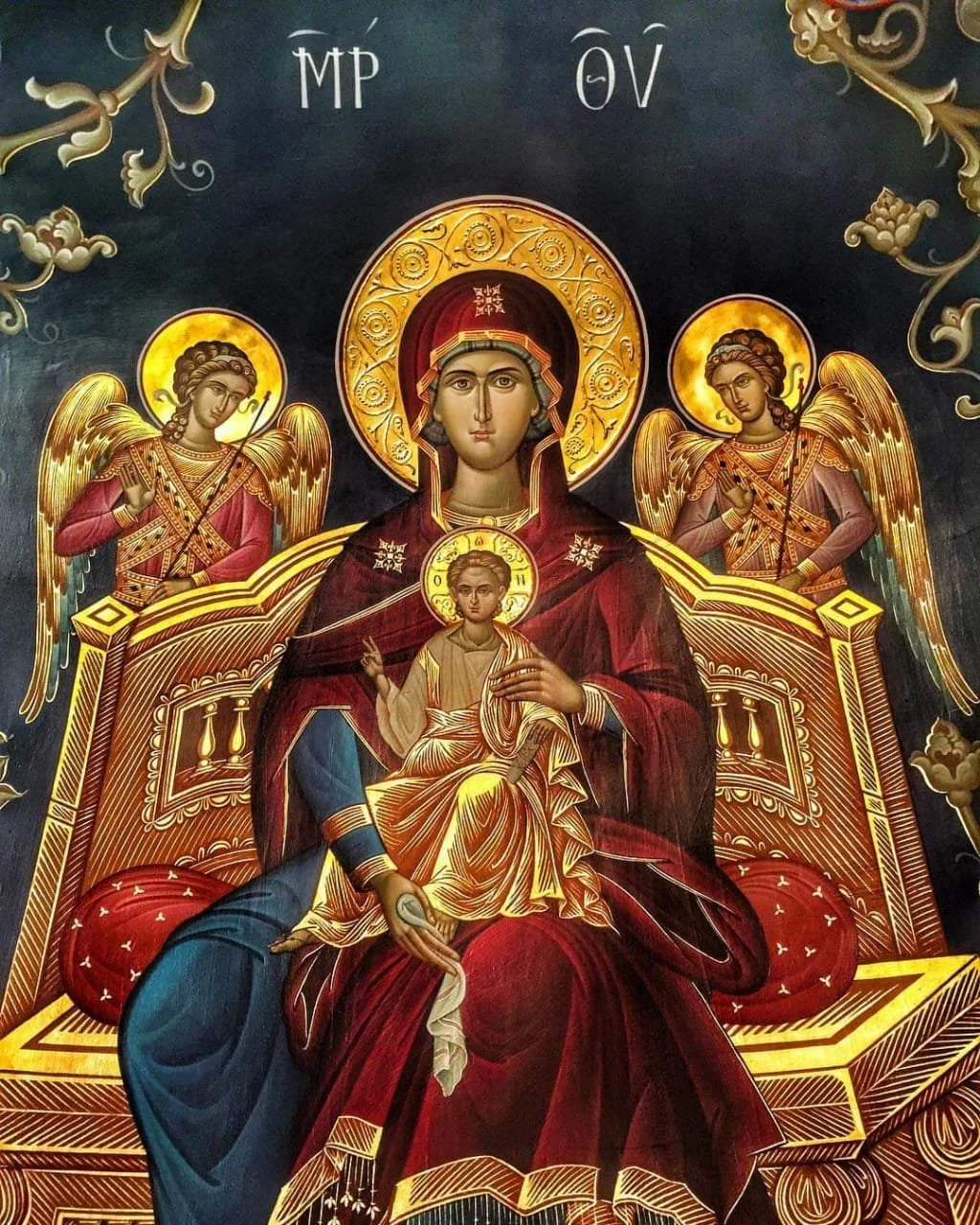
The desire for this encounter finds its initial fulfillment in the new covenant, and Mary, particularly in her role as the Mother of God, plays an essential part. One could say that in the new covenant the Lord reveals to us a new face and a new name, a name and a face suited to our wounded condition. In our brokenness, we aren’t ready to see the divine essence – this is likely why so many figures in the Old Testament find the prospect of seeing God’s face so terrifying, even as they are attracted to it. Nevertheless, the Lord in his kindness, rather than making us wait interminably, gives us a down payment on this face-to-face vision through the Incarnation. In Mary’s womb he fashions for himself a face that we can behold without fear. Who, after all, could be scared of a little baby? And Mary is a crucial instrument of this divine plan. It is from her own flesh that the Lord makes a human face for himself. Moreover, Mary is the first to see and to contemplate the human face of God. In her, the longing expressed in the psalms finds its first fulfillment. She gazes on her Lord who humbled himself to be her Son, and she invites us to meditate on his face – the face of mercy and of love.
Alongside this new face, the Lord also receives a new name – or rather an old name, with a new and deeper significance. Joseph and Mary give their Son the name announced to each of them by an angel – Jesus, “the Lord saves.” This name reassures us that the Lord wants to show us his face not to smite us, but rather to save us, to draw us up into his own life, as he already has done for his own Mother. Mary is the Mother of the God who saves, who draws near to us in a way suited to our lowliness, and who calls us to meet him, not by grasping to be like him on our own terms, as Adam and Eve did, but rather by humbling ourselves as both he and his Mother, the New Adam and the New Eve, did. On this great solemnity, let us thank the Lord for showing us his face through Mary his Mother, and let us ask her to help us imitate the lowliness that she and her Son exemplify, so that this partial vision of his face might lead us one day to the fullness of vision for which we all long.
Fr. Isaac Augustine Morales, O.P.