Monastic Life
“Intent upon God in oneness of mind and heart...”
Christianity's first monks and nuns fled from their native cities and villages into the Egyptian desert to seek God. Their goal was radical availability to the Word of God, an availability that meant abandoning worldly goods and concerns to attain that singleness of purpose called purity of heart.
Today as then, the basic impulse of Christian monasticism is a movement away from life in the world toward the eternal life of heaven. And, today as then, it is God's own spirit—the Holy Spirit—who ultimately brings us to the goal by his “groanings too deep for words.”
“In their undivided attention to the Father’s word: ‘This is my beloved Son, with whom I am well pleased’ (Mt 3:17), and in their loving acceptance of that word, cloistered nuns are always ‘with Him on the holy mountain’ (2 Pt 1:17-18).”
Our Monastic Life

Enclosure
Silence

Horarium

Work
The Habit

Penitential Practices
Enclosure
A hidden life of enclosure and separation from the world, in other words, a life of withdrawal from the world in the cloister, is the specifying element of monastic life and distinguishes it from other forms of religious life. Since the Second Vatican Council (1962-65) the Church has issued a series of documents on the nature and purpose of women’s contemplative life and norms governing the enclosure of nuns. The 1969 document Venite Seorsum and the 1999 document Verbi Sponsa provide a rich and sapiential understanding of the meaning of a cloistered life of withdrawal. While the norms given in these documents have been superseded by Cor Orans, the current teaching promulgated by Pope Francis in 2018, pondering the doctrinal/theoretical sections of the earlier documents can enrich one’s understanding of the practice of enclosure.
Cloistered nuns see themselves especially in the Virgin Mary, Bride and Mother, figure of the Church; and sharing the blessedness of those who believe, they echo her “Yes” and her loving adoration of the Word of life, becoming with her the living “memory” of the Church's spousal love.
- Verbi Sponsa
By withdrawal from the world, in fact and in spirit, the nuns, like prudent virgins waiting for their Lord, are freed from worldly affairs so that they may have leisure to devote themselves wholeheartedly to the kingdom of God. This hidden life should open their minds to the breadth and height and depth of the love of God who sent His Son so that the whole world might be saved through Him. Such was the enclosure chosen for the nuns by the most holy Patriarch [Saint Dominic] from the beginning…
- Constitutions of the Nuns
Silence
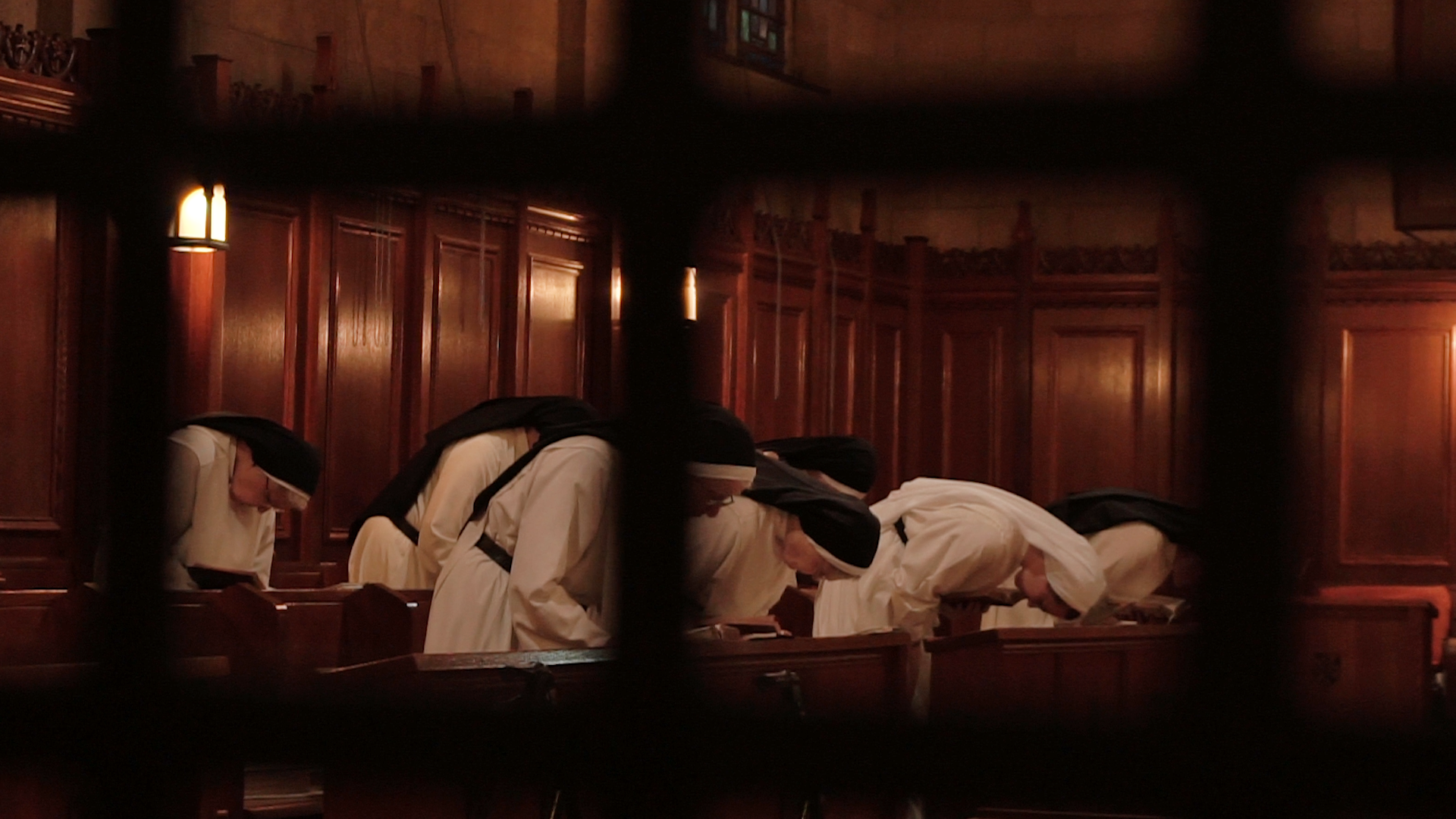
Monastic life in its most pristine Egyptian form took on two expressions: the anchoritic or eremitical life which was a solitary form of life and the cenobitic or communal form of life. Saint Augustine, whose Rule Dominican nuns follow, following the cenobitic model, developed his own vision of monastic life which was expressly communal. The common life of the nuns is strengthened and balanced by solitude and silence. The Rule states: “The main purpose for your having come together is to live harmoniously in your house, intent upon God in oneness of mind & heart.”

While it was said of our Father Dominic: “No one was ever more community minded, no one more joyous”, it was also said that the blessed Dominic “rarely spoke except with God in prayer, or about God, and he exhorted the brethren to do likewise.” Pondering this in their hearts, the nuns should make of their house, and especially of their hearts, a place of silence.
- Constitutions of the Nuns
Work
Work, both manual and intellectual, offers a manifest way of living out our obedience. We place all our gifts of nature and grace at the service of the common good, under the direction of the prioress. Work, whether washing floors, peeling potatoes, ironing habits, preparing classes for our novitiate sisters, or writing texts for our monthly mailing, is one of the ways we offer ourselves, body and soul to God, as living sacrifices (cf. Romans 12). In so doing we live in the service of his creative design and are associated with the work of redemption.
Typical daily work includes basic household chores such as cooking, sewing, cleaning and laundry. It also includes caring for our older sisters, gardening, printing, maintaining our libraries, crafting items for our gift shop such as candles, pottery, fudge, cards and other handmade items as well as other work that is conducive to the contemplative life and contributes to our financial upkeep.
No one shall perform any task for her own benefit but all your work shall be done for the common good, with greater zeal and more dispatch than if each one of you were to work for yourself alone. For charity, as it is written, "is not self-seeking," meaning that it places the common good before its own, not its own before the common good. So whenever you show greater concern for the common good than for your own, you may know that you are growing in charity. Thus, let the abiding virtue of charity prevail in all things that minister to the fleeting necessities of life.
- Rule of Augustine
Because of the effort it demands, work is one of the more common forms of asceticism. In addition, the perseverance and skill which it requires and the benefits it brings foster mental equilibrium and the formation and development of personality. Work is demanded by religious poverty and serves the common good by building up charity through cooperation. Moreover, by work the nuns share the common lot of most people, especially the poor. Since in their life work is subordinated to contemplation, this manifests a right ordering of values among earthly activities, according to the spirit of the Beatitudes.
- Constitutions of the Nuns

Penitential Practices
Since the human person is a substantial unity of body and soul, it follows that spiritual practices involve the body. Just as there are reverent postures for Mass and the Divine Office, so there are proper “postures”—so to speak—for expressing sorrow for sin and reparation. This is what we refer to as penitential practices and they assists us to not only discipline the weaknesses of our fallen human nature, but can also be meritorious for the salvation of souls—especially our own soul.
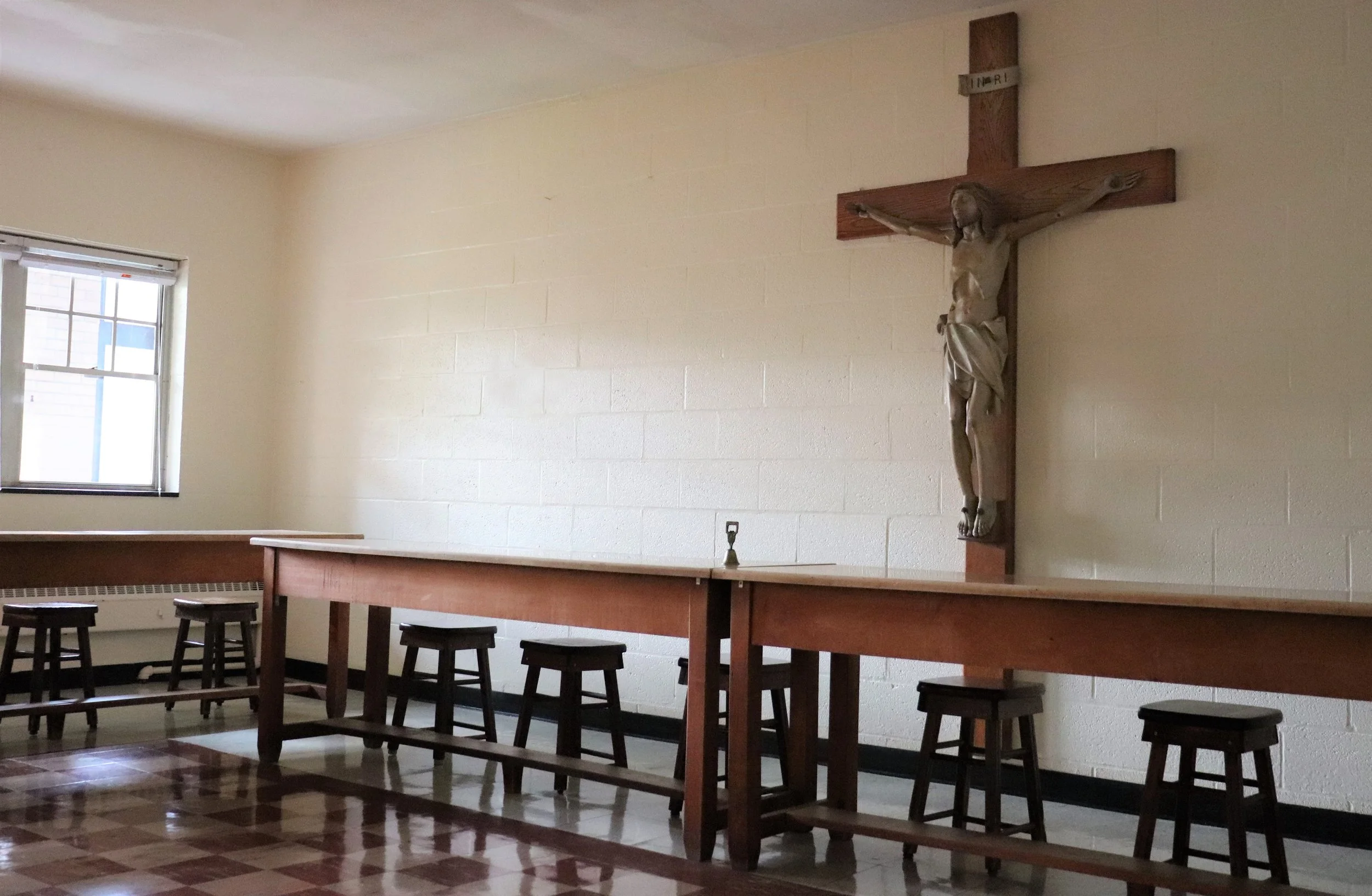
Some of our specific penitential practices include the use of narrow beds on wooden planks, hard wooden stools in the refectory, perpetual abstinence from meat (with the exception of poultry at two meals a week), and nocturnal vigils before the Blessed Sacrament.
“By reason of their religious consecration and the apostolic vocation of the Order, the nuns are urged more than the rest of the faithful to deny themselves, take up their cross, and bear the death of Jesus in body and soul, that they may merit the glory of the resurrection for themselves and for others."
- Constitutions of the Nuns
The Habit
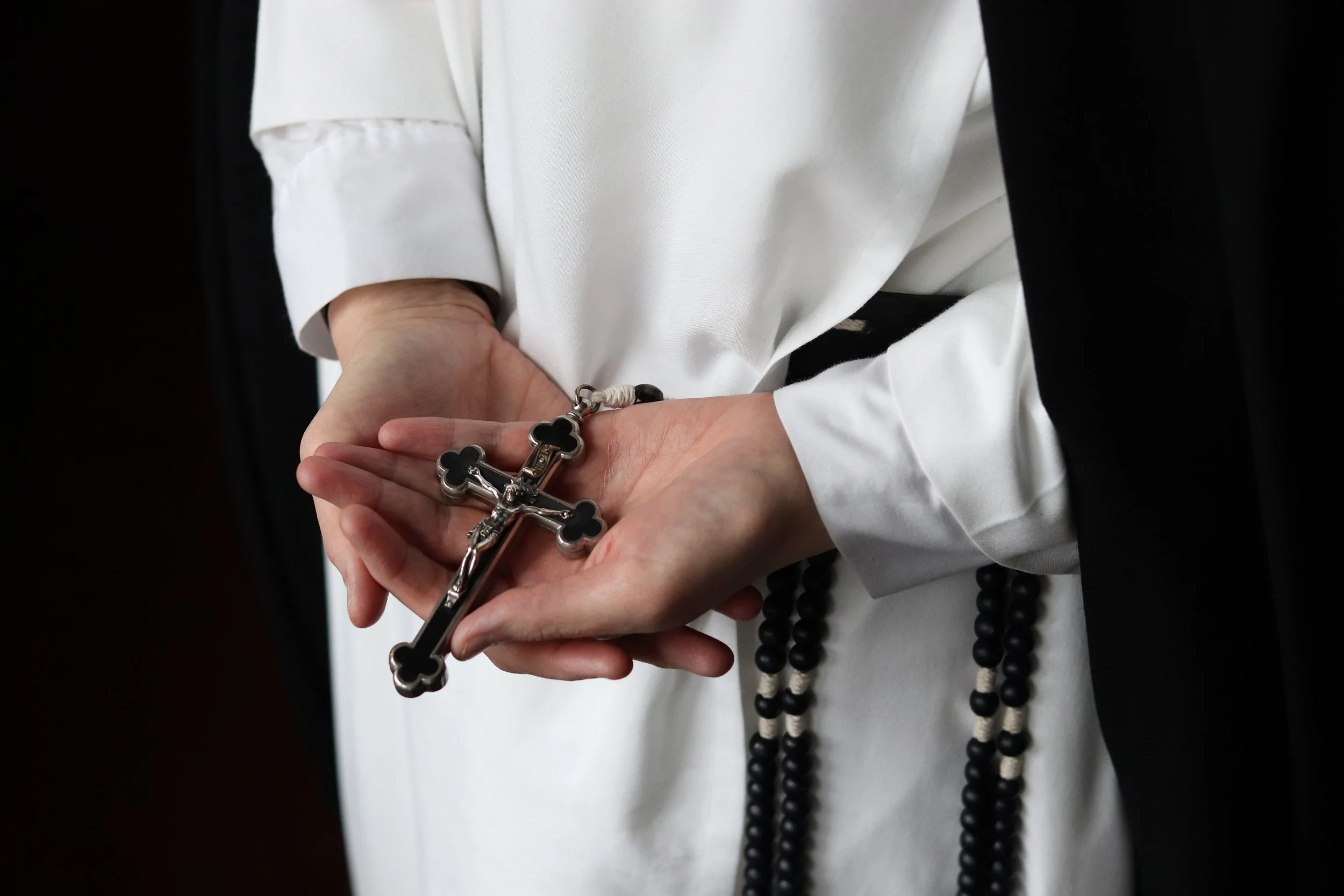
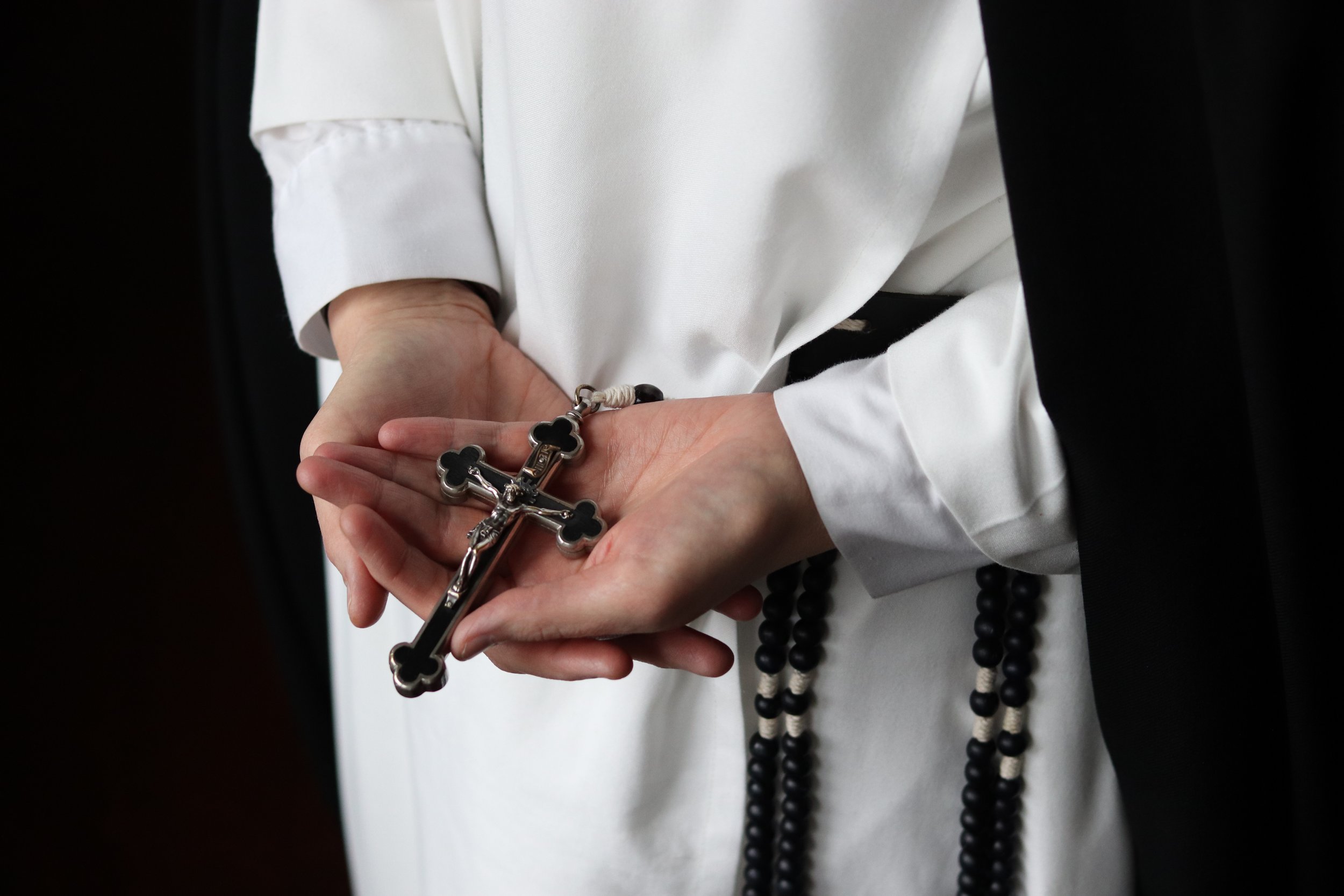
The wearing of a distinctive garb has been a common feature of monastic life in various religious traditions, even before the coming of Christ. In the early Christian monastic tradition, before the practice of taking of formal vows was instituted, the putting on the monastic habit was the sign of commitment to the monastic way of life. Early monastic authors such as Evagrius and John Cassian, explained the symbolism of the habit either by linking each article of it to a particular vice that it was meant to combat or by aligning its various pieces to the basic monastic virtues such as humility, simplicity and obedience. However one understands the symbolism of it, a monastic habit reminds the person wearing one, and those with whom she relates, that she belongs to God and has been set apart for a life of worship, conversion, and ongoing growth in virtue.
A Dominican habit adds a unique specificity. Those who are privileged to wear it have been set apart within a particular tradition which spans over eight hundred years. In this tradition, the white symbolizes the purity to which a follower of Saint Dominic is called and the black signifies the life of penance that is embraced by those who give themselves over to the mission of the Order, the salvation of souls.
A woman first receives the habit when she has completed the period of aspirancy and postulancy and is admitted to the novitiate. Her reception to the habit is a sign of her admission to the Order of Preachers and becomes, at her first profession of vows, a sign of her consecration.